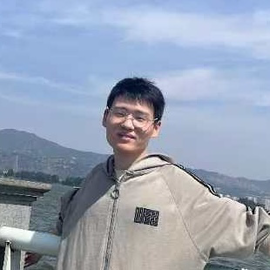
Talk on Metal–Organic Cages and Interlocked Structures by Dr. Yuchong Yang
On December 11, 2025, Dr. Yuchong Yang was invited to visit and deliver an academic lecture entitled “From Metal–Organic Cages to Interlocked Structures” to faculty members and students in Room A409 of the Tang Aoqing Building.
Dr. Yang received his bachelor’s degree from Sichuan University and obtained his Ph.D. in 2020 from the Department of Chemistry at Tsinghua University under the supervision of Prof. Xi Zhang. He subsequently carried out postdoctoral research at the University of Cambridge with Prof. Jonathan R. Nitschke. His research focuses on functional supramolecular assembly materials, covering the construction of novel assembled architectures, structure–property relationships, and the exploration of functional materials. The lecture primarily highlighted his postdoctoral research work.
In the lecture, Dr. Yang first introduced naturally occurring interlocked biomacromolecular structures, such as DNA and RNA as well as self-assembled interlocked collagen networks. Inspired by these natural systems, researchers have developed various strategies to construct artificial interlocked molecular architectures with complex topologies, including end-crosslinking of woven networks, hydrophobic effects, and metal-ion templating approaches. These artificial interlocked structures have demonstrated significant potential in areas such as ion transport, catalysis, and polymeric materials. Dr. Yang then pointed out the key challenges currently faced in this field, including the low synthetic yields of artificial topological structures and the fact that their topological complexity remains far inferior to that of naturally occurring biological interlocked systems.
To address these challenges, Dr. Yang presented his work on coordination-driven supramolecular interlocked assemblies based on imine-based metal–organic cages as core building units. By precisely regulating molecular tension and structural organization, his approach enables the efficient construction of higher-order topologically complex interlocked architectures. He further explored their unique host–guest properties and structural transformation behaviors, providing systematic insights into structure–property relationships. Throughout the presentation, a series of elegant single-crystal structures of imine-based metal–organic cages were showcased, offering the audience a deeper understanding of complex high-order artificial interlocked topologies.
During the discussion session, faculty members and students engaged in in-depth and lively discussions on the stability of complex topological structures, their potential applications, and the generality of the assembly strategies, creating a highly interactive and enthusiastic atmosphere.

(Drafted by Songbo Qi,reviewed by Yibin)